
Thriving Together: Self-Care for Volunteer Success
Share on social media:
Thriving Together: Self-Care for Volunteer Success
Volunteer engagement professionals often carry out meaningful work that touches many lives. The work requires compassion, patience, and focus. Because of this, stress can build quickly. As a result, personal well-being may fade into the background. However, healthy leadership grows when balance and boundaries come first.
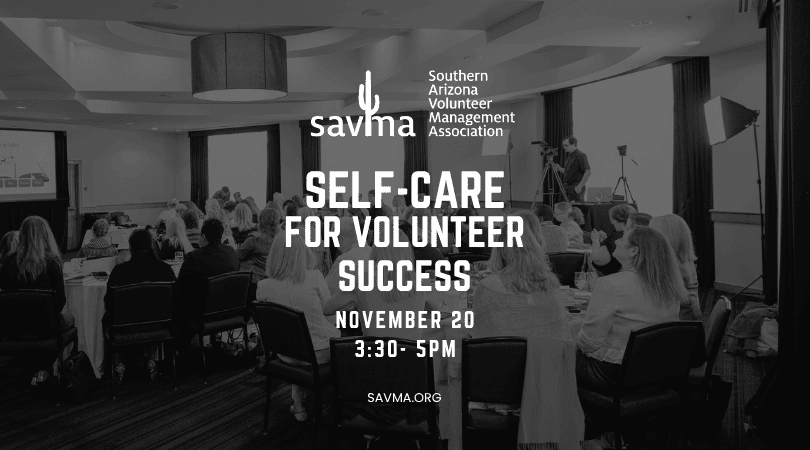
These ideas guide Thriving Together: Self-Care for Volunteer Success, a session led by Dr. Melissa Hernandez, Jessica Shaffer, and Miles Chandler of the Cradle to Career Partnership at United Way of Tucson and Southern Arizona. Their message is clear. Self-care is not optional. Instead, it supports volunteers, teams, and sustainable programs.
Bios from Our Self-Care for Volunteer Success Presenters
Dr. Melissa Hernandez
Associate Vice President, Cradle to Career Partnership
Dr. Melissa Hernandez is the Associate Vice President of the Cradle to Career Partnership anchored at the United Way of Tucson and Southern Arizona,

Dr. Melissa Hernandez, Cradle to Career Partnership
where she leads an influential collective of organizations and community members working to transform systems and expand educational opportunities for more than 11,000 youth in Pima County.
A passionate advocate for equity and lifelong learning, Dr. Hernandez brings people together to dismantle barriers and build pathways to success from early childhood through college and career. Beyond her leadership at C2C, she shares her expertise as a college educator, serves on the board of the For a Brighter Future Foundation, contributes her time as a board member for her son’s Scout Troop, and empowers women and girls through her work with the Soroptimist organization.
Dr. Hernandez earned her Ph.D. from the University of Arizona and both her master’s and bachelor’s degrees from Northern Arizona University. Outside of work, she finds joy in cheering at her son’s club soccer games, enjoying Saturday night family gatherings, and exploring Arizona’s scenic trails.
Jessica Shaffer
Program Coordinator, Cradle to Career Partnership

Jessica Shaffer, Cradle to Career Partnership
Jessica Shaffer supports cross-sector collaboration to improve educational outcomes and economic mobility for youth. She contributes to communications, resource development, partner engagement, scheduling, and program logistics.
Jessica is a Tucson native with a B.S. in Information Science from the University of Arizona. Her interests include baking, music, creative projects, and time with her two beagles.
Miles Chandler

Miles Chandler, Cradle to Career Partnership
Program Manager, Cradle to Career Partnership
Miles Chandler brings experience from K–12 education, AmeriCorps, and youth development organizations. He holds a B.A. in Elementary Education with an ESL emphasis.
Miles enjoys reading, writing, and hiking throughout Southern Arizona.
Did You Miss Your Chance to Thrive with Self-Care?
Don’t worry, because our presenters left us with some great takeaways and tools. We completed a self-assessment and analyzed our own self-care practices. Then we reflected on our weaknesses and discussed how they might impact role modeling for our volunteers. With expert facilitation, we were put to work brainstorming ways to address our weak spots. In typical Cradle to Career Partnership fashion, we held a gallery walk* to review everyone’s ideas for tackling their weak spots! In our final act of kindness to each other and ourselves, we publicly committed to one item on the list to improve our self-care and volunteer success.
Why Self-Care Matters in Volunteer Engagement
The volunteer engagement field often involves emotional labor. Many professionals support volunteers who work with children, families, older adults, or people in crisis. Additionally, the work can feel urgent or personal. Because of this, stress can grow during the year.
Therefore, self-care becomes a key part of leadership.
When well-being stays a priority, many benefits appear. For example, compassion fatigue decreases, or as Miles shared, “the many flavors of compassion fatigue.” Clear communication builds trust. Stronger relationships form. Programs become more resilient. Teams respond better when expectations remain steady.
In short, self-care supports the emotional health of the whole volunteer system. Furthermore, when leaders model balance, volunteers often learn to do the same.
Setting Boundaries for a Healthier Team
The session also highlights the importance of boundaries. Many people think boundaries limit connection. However, they actually create safety and clarity.
Boundaries help:
- Clarify expectations
- Prevent confusion
- Protect emotional energy
- Encourage problem-solving
- Reduce pressure
- Strengthen stability
Below are practical ways to use boundaries:
1. Set communication hours
Clear response times help everyone. As a result, staff and volunteers plan better and feel less stress.
2. Write clear volunteer roles
Specific role descriptions reduce confusion. Additionally, they help volunteers feel confident.
3. Build systems that reduce last-minute pressure
Templates, onboarding steps, and training plans prevent crisis-driven work. Therefore, programs become calmer and more consistent.
4. Show what healthy boundaries look like
Breaks, time off, and rest signal balance. Because of this, teams learn to support a healthy culture.
Boundaries do not create distance. Instead, they create understanding and trust.
Reducing Compassion Fatigue
Compassion fatigue is common in caring roles. Volunteer engagement requires empathy and support. Over time, this can feel heavy. Even so, small habits help reduce the load.
The presenters suggest:
- Naming emotions
- Daily grounding rituals
- Connecting with peers
- Requesting support
- Journaling or reflection
Consequently, emotional pressure decreases. Teams feel more flexible and supported.
Leadership Grows Through Well-Being
Dr. Hernandez shares an important truth: self-care is a leadership skill. Programs built on relationships need leaders who feel grounded. Therefore, personal well-being protects the program and strengthens culture.
Well-being supports leadership in many ways. Healthy leaders create healthy culture. Rest increases clarity. Sustainable habits prevent burnout. Steady leadership builds trust.
In other words, leadership grows when those guiding the work feel strong and supported. We heard examples from staff at CASA, that employees host an employee fun hour weekly to combat the fatigue and reenergize as a team. Different examples of activities included a baked potato bar, a murder mystery, and a scavenger hunt.
The Ripple Effect of Self-Care
Self-care supports more than one person. As well-being improves, positive change spreads across the program. Teams collaborate more easily. Volunteers show up with confidence. Organizations serve the community at a higher level.
Because of this, self-care aligns with SAVMA’s Individual Industry Standards of Practice. It strengthens planning, training, performance management, and volunteer retention.
A Community Approach to Caring for Caregivers
Sustainable leadership is a shared effort. When volunteer engagement professionals care for themselves, everyone benefits. Furthermore, when teams support one another, the impact grows stronger.
As planning begins for the next volunteer season, consider which:
- boundaries support more balance?
- rituals ease stress?
- peers offer support?
- systems reduce pressure?
Self-care creates space for clarity, energy, and creativity. In addition, boundaries protect the relationships at the heart of volunteer engagement. Together, these practices build a healthier and more resilient volunteer workforce.